Interconnected Porous Structure
The three-dimensional pore network can provide pathways for fluid movement and accessible internal surfaces. Connectivity and pore distribution should be verified for the intended application.

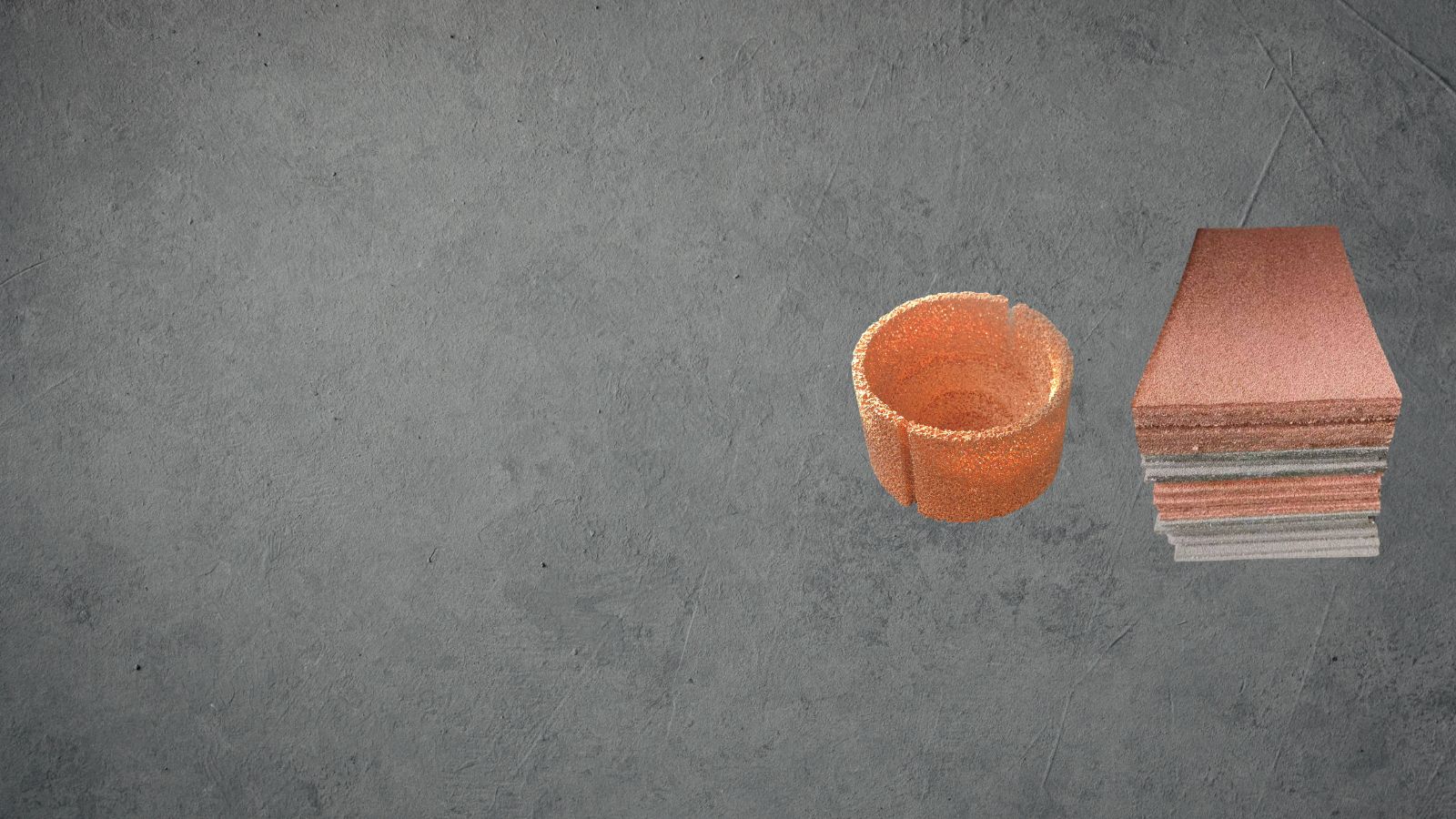
HY Metal Foam provides customized porous metal material solutions for industrial applications. Our silver foam solutions can be discussed according to pore density, dimensions, thickness, structural requirements, and intended operating conditions.
With experience in porous material development, prototype production, and manufacturing, we support customers evaluating silver foam for functional components, engineering projects, and specialized applications.

Silver foam is a porous metallic material composed primarily of silver. Its interconnected three-dimensional structure provides a network of metal ligaments and pores, combining the electrical and thermal conductivity of silver with a porous architecture.
In engineering selection terms, silver foam is typically considered when ultimate electrical and thermal conductivity justify the cost of the base material. Depending on its manufacturing process and structural specifications, it can be evaluated for applications involving electrical conduction, thermal management, and functional component design.
Selecting the right material requires more than identifying silver foam by name. Pore structure, thickness, dimensions, chemical composition, and the working environment should all be evaluated against the intended application.
Silver foam combines a porous architecture with the electrical and thermal properties of a silver-based metallic framework. The actual performance depends on material composition, pore geometry, and processing.
The three-dimensional pore network can provide pathways for fluid movement and accessible internal surfaces. Connectivity and pore distribution should be verified for the intended application.
Silver is characterized by very high electrical conductivity. The silver-based framework can support electrical conduction in selected components, with performance depending on material grade, porosity, geometry, and assembly conditions.
The material overview describes excellent thermal conductivity for silver foam. Thermal performance in a component depends on pore geometry, porosity, material purity, and the overall thermal design.
A porous structure can provide substantial internal surface area relative to a solid material of comparable external dimensions, subject to its pore morphology.
In material selection guidance, silver foam is the option selected when ultimate electrical and thermal conductivity justify the cost. It is typically discussed for demanding electrochemical and thermal applications.
Depending on manufacturing feasibility, product geometry and dimensions can be evaluated for sheets, blocks, cylindrical components, and special-shaped structures.
Silver foam should be specified according to the requirements of the final component or system. The following table outlines the main parameters to confirm during product selection.
| Material | Silver-based porous metallic material |
|---|---|
| Pore Density | The company website lists a general pore-density range of 5–150 PPI across its porous metal materials. Confirm the available range for the specific silver foam grade and required configuration. |
| Porosity | Confirm the required porosity and the corresponding measurement method with the supplier. |
| Thickness | To be confirmed according to the requested silver foam grade, dimensions, and manufacturing feasibility. |
| Pore Size | Specify the target pore size and acceptable range according to flow, surface, or component requirements. |
| Dimensions | Discuss required length, width, height, diameter, or other component dimensions. |
| Product Form | Configuration and geometry are subject to material type, manufacturing process, and order requirements. |
| Electrical Conductivity | Described in the material overview as excellent. Confirm the required conductivity-related measurements for the specific grade. |
| Thermal Conductivity | Described in the material overview as excellent. Evaluate against the heat-transfer requirements of the component. |
| Temperature Capability | Listed as application-dependent. Discuss the operating temperature range and environment with the engineering team. |
| Chemical Composition | Confirm silver content and purity, impurity limits, and any application-specific composition requirements. |
| Surface Condition | Specify any requirements for surface cleanliness, oxidation level, coatings, or subsequent processing. |
| Customization | Subject to technical evaluation, manufacturing capability, and order specifications. |
The suitability of silver foam depends on its grade, pore structure, chemical compatibility, and operating conditions. Discuss the application requirements before selecting a material.
The material overview lists high-performance electrodes among the applications for silver foam. Electrode design should be evaluated against the electrochemical system, current density, and electrolyte compatibility.
Silver foam can be discussed for selected electronics applications where an electrically conductive porous structure is required. Confirm geometry, contact requirements, and assembly conditions for each design.
The overview lists specialized thermal management for silver foam. Thermal design should be validated against the heat load, working environment, and component geometry before deployment.
Where a porous component must combine electrical conduction with accessible internal surface area, silver foam can be evaluated as a candidate material alongside other porous metals.
For research projects and prototype development, silver foam specifications can be discussed according to the required pore structure, dimensions, and test conditions.
For specialized industrial projects, discuss whether silver foam can be integrated into a custom component or assembly based on geometry, mechanical loading, and operating conditions.
HY Metal Foam focuses on porous metal material development and customized manufacturing. The company describes capabilities spanning material preparation, composite processing, large-format forming, special-shaped component machining, material testing, prototype development, and production.
For silver foam projects, the required material properties, dimensions, geometry, and processing steps should be reviewed individually to determine the feasible solution. As a premium material option, silver foam requirements are typically discussed in detail to confirm that the material selection fits the application.
Providing clear technical requirements helps reduce specification gaps and makes quotation discussions more efficient.
Describe the operating environment, component function, and required performance.
Share the target pore density, dimensions, thickness, composition, and tolerances.
Discuss material availability, samples, processing requirements, and inspection criteria.
Confirm quantity, packaging, delivery requirements, and the final agreed specification.
Answers to common questions about silver foam structure, specifications, applications, and custom orders.
Silver foam is a porous metallic material consisting primarily of silver. Its three-dimensional pore network combines a metallic framework with interconnected voids. Depending on the grade, it may be considered for high-performance electrodes, electronics, and specialized thermal management components.
PPI means pores per inch and is commonly used to describe pore density. It should not be treated as an exact measurement of pore diameter. Buyers should confirm the required PPI, pore size, and measurement method with the supplier.
Available pore density depends on the specific silver foam grade and manufacturing process. HY Metal Foam lists a general 5–150 PPI range across its porous metal materials. Please contact our team to confirm the applicable range for your silver foam requirements.
Custom dimensions and component geometries can be discussed based on manufacturing feasibility. Please provide a drawing or target dimensions, together with the required thickness, pore structure, quantity, and intended application.
Begin with the required function and operating environment. Review pore density, pore size, thickness, dimensions, material composition, and electrical or thermal requirements. Testing may be necessary to verify suitability for critical applications.
In the company's material selection guidance, silver foam is selected when ultimate electrical and thermal conductivity justify the cost of the base material. Copper foam is often evaluated for thermal management and capillary structures, while nickel foam is common for corrosion-resistant filtration and electrode applications. The final choice depends on the performance requirements and budget of the project.
Yes, high-performance electrodes are listed among the applications for silver foam. Suitability depends on the electrochemical system, current density, electrolyte compatibility, and electrode design. Confirm the required specification before placing an order.
Please provide the application, required dimensions, thickness, PPI, pore size, porosity, material composition, quantity, and any special inspection or documentation requirements. If some parameters are not yet defined, describe the intended use so the technical team can discuss the next steps.
Sample development can be discussed according to the material, specifications, and project requirements. Availability, sample lead time, cost, and subsequent production feasibility should be confirmed before ordering.
Documentation depends on the product and the agreed inspection scope. If required, specify whether you need a technical data sheet, chemical composition results, dimensional inspection records, or a certificate of analysis. Availability should be confirmed before purchase.
Explore our broader porous material portfolio and learn more about HY Metal Foam's manufacturing and customization capabilities.
Share your application, target dimensions, pore structure, and order quantity. Our team can discuss the material requirements and assess a suitable manufacturing approach.